
Outpost Campers are engineered for true four-season use and built to be exceptionally watertight. This rugged construction keeps harsh weather outside where it belongs—but it also means that moisture created inside the camper doesn’t escape on its own. Without proper moisture management, condensation can build up, leading to discomfort and potential long-term damage.
Moisture adds up faster than most people realize. The human body exhales roughly ½ liter of water per day. If two people spend a week camping in an Outpost Camper—even for just 8 hours a day—that can introduce approximately 2.5 liters of moisture into the interior air just from breathing. Add hot showers, cooking, drying wet gear, or cold-weather camping to the mix, and interior humidity can rise quickly.
So how do you keep your camper dry and comfortable?
Built-In Moisture Control Features
Outpost Campers include several design elements specifically chosen to reduce condensation:
Proprietary Composite Panels
These panels create a near thermal-transfer-free environment, helping to minimize cold surfaces where condensation can form. In very cold climate conditions, cold spots can develop under the mattress due to lack of warm air reaching this area when the cabin is being heated. In addition to allowing for fresh air ventilation in the camper, we recommend allowing for warm air to flow between the mattress and bed panel of the camper to prevent these cold spots where moisture can condense. This can be achieved by selecting the optional Froli sleep system for under your mattress when you purchase your camper, or using some similar type of under mattress ventilation system.
Espar Diesel Heater
Our Outpost Campers Heater Box is mounted outside of our camper so there is no risk of leaks or fumes inside. We use an Espar (Eberspächer) diesel air heater to significantly reduce moisture because they use a sealed combustion system. Exhaust gases—including water vapor—are vented outside, while warm, dry air circulates inside. Heating the air lowers relative humidity and helps maintain a dry interior.
Diesel is the preferred choice over propane because diesel heat is dry, whereas propane heat adds moisture to the air.
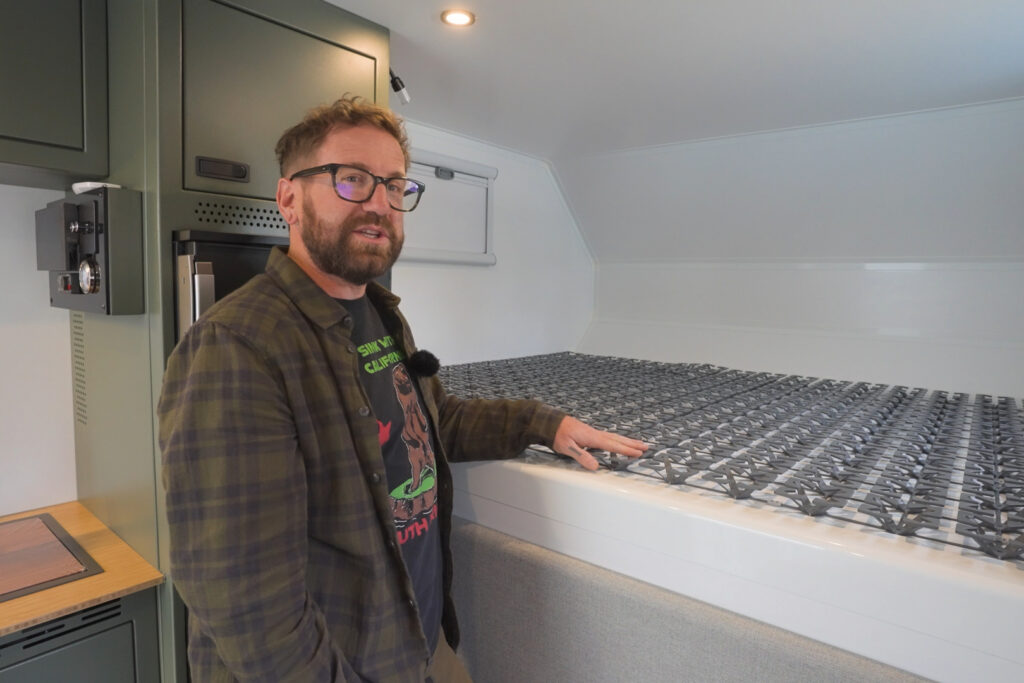
Froli™ Under-Mattress System
The Froli system promotes airflow beneath the mattress, helping prevent condensation buildup, mildew, and moisture-related odors in the sleeping area. Our camper comes standard with a 5” thick memory foam mattress. This adds comfort and airflow with only adding 1.5” to the overall height.
While these features are highly effective, active moisture management by the owner is essential.
Best Practices for Preventing Condensation
Whenever the camper is occupied, follow these simple habits:
Ventilate continuously
Keep at least one window and one roof vent slightly open at all times. Opening a window to the middle locked position and either the dome fan or Maxxair fan cracked slightly open is enough to allow moist air to escape.
Maintain proper interior temperature
In cooler conditions, aim for an interior temperature around 74°F. Warmer air holds more moisture, reducing condensation on colder surfaces.
Use fans during moisture-producing activities
When showering, cooking, or boiling water, turn on the appropriate exhaust fans and leave them running until all visible moisture has cleared.
If Moisture Begins to Build Up
If the interior starts to feel damp, take a more aggressive approach right away:
- Increase interior heat above normal operating levels
- Run roof fans on high and set windows to middle locked position even when you’re away from the camper
- Use a portable dehumidifier if necessary to help remove excess moisture
- Wipe down any heavy areas of condensation(e.g., door and window frames)
Thoroughly drying the camper is critical to preventing mold, material damage, and long-term issues.
Protecting Your Investment
Outpost Campers are designed and built for years of adventure. Proper use—and consistent moisture management—are key to keeping your camper in top condition. Managing moisture improves comfort, protects materials, and helps prevent mold, wood damage, and premature wear.
Once these practices become routine, moisture control is simple—and your Outpost Camper stays dry, comfortable, and ready for the next trip.
If you still have any questions or concerns fill out the Support Contact Form on the Owner Support page.